
The Hawaii Clipper marked a pivotal technological milestone in the landscape of commercial aviation. Its significance was such that it drew the attention of elements within the Japanese Empire who harbored concerns over the potential expansion of the United States into the South Pacific and Asia—a concern that wasn’t entirely without merit.

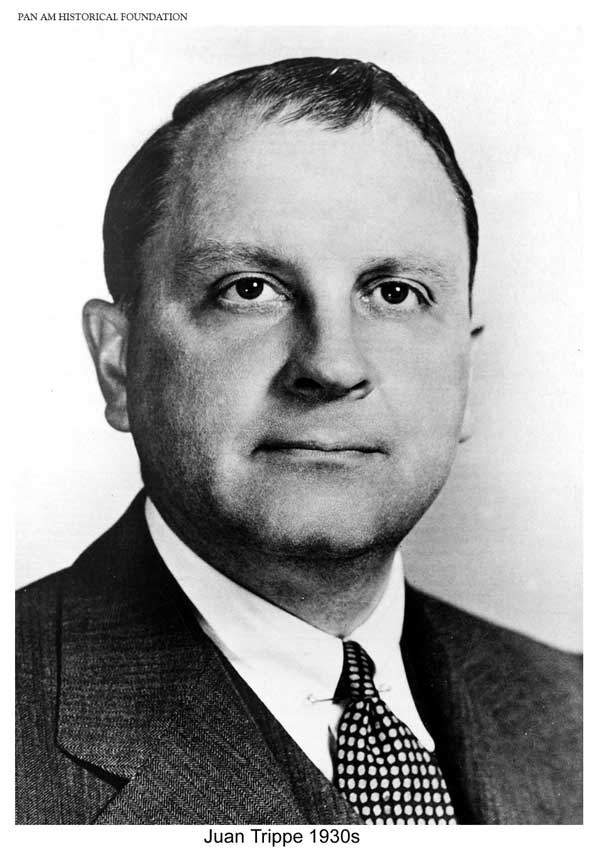
In the realm of aviation, Juan Trippe’s vision was unstoppable, despite his awareness of Japan’s own expansion in Asia. He was resolute in his plan to establish passenger and mail routes to Asian destinations, including Hong Kong. Even in the face of competition, shareholder interests, or Japanese opposition, his determination prevailed.
Tragedy, however, cast its shadow on the horizon with the loss of the esteemed chief pilot “Eddie” C. Musick, the result of either a catastrophic fuel tank explosion or a concealed bomb within the fuselage. This loss, coupled with the explosion of the Samoan Clipper (a Sikorsky S-42B flying boat) and the subsequent disappearance of the Hawaii Clipper under circumstances suggestive of espionage, stirred doubts about the feasibility of this commercial venture.

The NC 14714 Hawaiian Clipper, later renamed the Hawaii Clipper, was a creation of the Glenn L. Martin Company of Baltimore Maryland in the early 1930s. The M-130 aircraft, initially known as Martin Ocean Transports, first took flight on December 30, 1934, earning a reputation akin to the Concorde of its era. Engineered for safety, opulence, and ruggedness, these flying boats set the standard for similar aircraft that followed. The trilogy comprised the Hawaii Clipper (NC-14714), Philippines Clipper (NC-14715), and China Clipper (NC-14716).
Notably, the Hawaii Clipper etched its name in history by becoming the first airline to generate revenue with a transpacific passenger service, commencing on October 21, 1936, between Alameda, California, and Manila, Philippines. While the Hawaii Clipper enjoyed an uneventful time traversing the Pacific skies, this journey was cut short on July 29, 1938. Trip #229 (they called them trips back then) embarked from Alameda on July 23 and charted a course where the proximity to Japanese-held territories increased the inherent risks for passengers and crew.

From California, Trip #229 took the Hawaii Clipper and its twelve passengers to Honolulu. Among the well-to-do passengers were nine highly experienced crew members with very impressive credentials. When it came to the creme-of-the-crop, Pan Am Airways had a reputation for hiring the best. Whether they be a steward or pilot, mechanic or navigator, they were the best tops of their trade in the most advanced passenger aircraft in the world.

Having left San Francisco harbor a little after 3:00pm Pacific time, the Clipper arrived in Perl City Hawaii a little after 8:00 in the morning of the 24th. They had flown 2,410 miles non-stop and it was always the most dreaded as it was the longest and most lonesome of all the legs from the US to China. After a night’s stay in Honolulu, the trip continued with only six passengers. This small group, accompanied by the seven-man crew, forged ahead to Midway Island and, ultimately, to Hong Kong.
“The Tom Toms of Hades,” as the engines were nicknamed, provided an unceasing drone that accompanied hours of conversation within the luxurious cabin. The sleeping quarters, usually secured on shorter flights, offered comfort to those afflicted by air sickness. This unique experience bestowed a level of prestige that most could only dream of.
On this fateful trip #229 aboard the Hawaii Clipper were…


Find more information, stories, photos, and video clips on The Lost Clipper’s Facebook page.
.
.
 The Lost Clipper - The mission to bring 15 forgotten Americans home
Is there any additional information or photos of Third Officer, J. M. Sauceda? He was born in the same small town that my family is from, Somerset. I’d like to glean some more info on his so maybe I can share with his family members if they are still in Somerset.
LikeLike
From what I understand – they were bearer documents and owned by the presenter. The last we heard of there were reports that they were removed from a bank vault in Garapan City, Saipan in 1944 by US Marines and they stormed the city. Allegedly they were given to a US Navy Intel officer and they soon vanished (along with a flight bag owned by Earhart that had maps and a logbook). I personally interviewed Major Rick Spooner who was a young Marine on Saipan during the fighting and at the age of 92 – he says he can still see them in his mind.
LikeLike
Were the gold backed bank notes bearer documents (that is any bearer could convert them into bullion), or did they require a proof of ownership? Are they traceable through serial numbers? Is there any record of them being “cashed in”?
LikeLike
Thanks for the reply Guy
LikeLike
My pleasure Robert and again sorry for the delay.
LikeLike
Guy – fascinating website on a fascinating topic. Based on the limited research I have done and reading segments of Charles Hills Book – i do beleive there is something to the hijack theory. Hill laid out an interesting case – albeit a bit complex. I do know from research that the Japanese had a decent spy network and they had motives to take out the passengers – whether it was money or knowledge the passengers had which could have weakened Japanese interests at the time. Getting their hands on the plane also could have saved years of technical research as they planned for war.
My question is if you are going back to Truk to do any more research and what the latest updates are to the case. Also – what is your theory on what happened to the actual aircraft. Keep up he great work..
LikeLike
Thank you for your message Robert and welcome to the discussion. You are correct about the spy network however most folks don’t realize that some military leaders wanted the cover to deny any sort of connection to industrial espionage and later sabotage of commercial activities by employing Black Ocean Society (early Yakuza) members to do their bidding. The are many FBI cases which indicated those very things – including an account by Albert Lodwick who worked with Hughes and the H-! by allegedly pulling visiting Japanese air force generals to its New Jersey hangar off its wings. They may not have gotten detailed information from the encounter but they certainly saw something they liked. The transcribed account may be seen here: http://www.456fis.org/HOWARD_HUGHES_IN_HIS_OWN_WORDS.htm
As for your question about going back to Truk – we do have plans in the works to secure and recover the remains of the passengers and crew. The final disposition of the Martin M-130 may never be discovered due to the secrecy of the Empire and the near total destruction of documents and photos toward the end of the war to hide war crimes and potentially embarrassing / illegal activities that would lead to even more condemnation by the allies. Thanks for visiting and stay tuned!
LikeLike
Where can I find the passenger list? This is the aircraft our family legend says my uncle’s brother Dan Nelson disappeared with. I’d be enormously surprised if Dan was a spy; he was third generation Norwegian Lutheran missionary. I didn’t know there was this much information about that flight; we had it all garbled. Was there bullion on board or not? Were the high jackers Filipino pirates, Japanese naval personnel, or…. what’s the rumor?
LikeLike
Hello 9HiDesert14,
Thanks for your message but I am confused by it. I know of no passenger or crew member aboard Pan Am Trip #229 named Dan Nelson. The folks that were aboard are confirmed as:
Crew:
Chief Pilot – L. Terletzky
First Officer – M. Walker
Second Officer – G. Davis
Third Officer – J. Sauceda
Forth Officer J. Jewet
Engineer – H. Cox
Asst. Engineer – T. Tatum
Radio Officer – W. McGarty
Steward – I. Parker
Passengers:
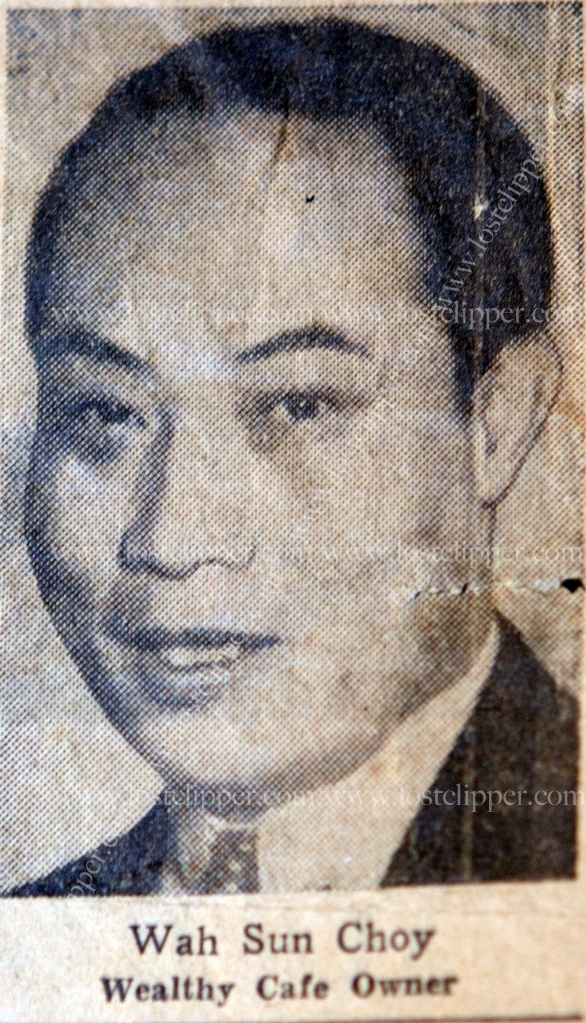
W. Choy
H. French
K. Kennedy
E. McKinley
F. Meier
E. Wyman
Perhaps he was on the California to Hawaii Leg of the trip? Some passengers ended their trip at that point and did not continue Westward.
Thanks for checking in.
GT
LikeLike
I collect stamps and covers (envelopes) from the hawaii area, a cover I recently purchased is labeled Pan American Airways and dated Honolulu Hawaii Oct 14,1941. is there anyway to find out which flight it was?.
LikeLike
There is always chance it could be solved your question due to the process of elimination which aircraft where in service, especially to and from Hawaii. The first place I would start is here: http://hawaii.gov/hawaiiaviation/hawaii-commercial-aviation/pan-american-airways and also sending an email the fine folks at the Pan Am Historical Foundation here: http://www.panam.org/
Hope this helps you on your efforts. Best of luck!
Guy
LikeLike
1. On reading the docu novel of the hijacking, a few years ago; seems it mentioned the discovery of the engine serial numbers in a Japanese factory following the surrender.
2.Also was the passenger named K.A. Kennedy, the Ames Research engineer ?
3. Did you identify each passenger’s security threat to Japan anywhere ?
PS; I followed TIGHAR (the search for Amelia E.) a few years back and it seemed an endless dismissal of certain statements and island witnesses. Anything that didn’t fit the Narrative of Gardner Island was out. Seems it became a ‘fund raiser’ in support of excursions into the area. Hope this remains purely factual and all-inclusive.
LikeLike
Waiting curiously to hear more……
LikeLike
Waiting curiously to hear more……Very exciting reading all this mistery into the disapperence of the Clipper and my Uncle Jose Maria….
LikeLike
Thanks Guy, very informative. Makes me even more curious.
LikeLike
Is it true that the Jap mig fighters were equipped with similar technology as the clipper?
LikeLike
Well, sort of. The Mig was actually a Soviet era jet fighter, so no comparison there. However, there is a case that the clipper was stolen to inspect and copy the latest American powerhouse, the Pratt & Whitney R1830 Twin Wasp (950HP) radial engine. The Japanese engine in which you are thinking of is the Mitsubishi Kinsei 金星 (Venus) which was based on the Pratt & Whitney R-1689 Hornet engine. Also the Nakajima Sakae 栄 (Prosperity) engine has also been mentioned as gaining some influence into later modification from the P&W Twin Wasp engine. So to answer your question; yes, there are some indications that the engines were influenced by American engine technology used by the Hawaii Clipper however, nothing yet has been discovered to say the influence came DIRECTLY from the vanished Martin M-130 flying boat.
LikeLike
This may seem unrelated, and quite known, but anyway, in 1939, the Japanese bought the DC-4E, and they took it apart, and used it to design and build their own bomber, the Nakajima G5N. The Nakajima had identical problems to the DC-4E.
P.S. The DC-4E used 4 Pratt & Whitney R-2180-A Twin Hornet engines.
LikeLike
Hello Miles and excellent insight into the engine theory. I have too heard this from a tech transfer engineer who studied that and similar events with French and English engines as well as American aircraft motors. He said that at the time, the empire was looking to beg, borrow, buy or even steal examples to create something that would meet their needs and objectives. It is possible that the military complex in Japan wanted to more closely examine the advanced version of the P&W engines that were installed on the Hawaii Clipper two weeks before her disappearance and took the opportunity to do so while intercepting the three million in gold backed bank notes headed to China.
LikeLike
Any chance the Federal Gov would ever attempt to negotiate a return of these mia’s like they did the Vietnam mia’s? If they were on a government mission, they would technically be Federal agents, yes?
LikeLike
Hi Elisa,
Unfortunately, there is no one to negotiate with any longer. The island is free for tourism and the local authorities are very cooperative. The only real issue is 100% identifying the location of the remains and then forming a team of construction laborers and heavy equipment along with forensic scientists to ensure the rermains are handled with proper care. It is essentually a seventy year old crime scene.
LikeLike
I see. So what is needed now is a forensic team like the Smithsonian Forensics Lab. They work with law enforcement agencies to solve crimes, even very old crimes. Way, to interesting, Guy. I guess it would have to involve national security for the state department or a national law enforcement agency to get involved in a seventy year old unsolved crime and bring in the Smithsonian? Well, Guy this is without a doubt very intriguing and has me on the edge of my seat. Thanks for the ride.
LikeLike
Thanks for visiting! Please feel free to ask any specific questions you may have.
LikeLike
Waiting to hear more…
LikeLike
no comment
LikeLike